Client Interview: A Long-Term Perspective on Fine Wine as an Investment.
- Daniel Ward
- Jan 14
- 4 min read
An interview between Martin Docherty, a partner at Cellar Advisor and Alex Eichhorn.
Martin: You've been building a wine portfolio for a number of year now: To start, what originally attracted you to fine wine as an investment?
Alex: My initial interest came from a broader allocation to alternative assets. Since the early 2000s, and especially after the financial crisis, it became clear to me that traditional portfolios benefit from assets with low correlation to equities. Fine wine stood out because it combines scarcity, global demand, and a long-term track record. Unlike many financial assets, wine has intrinsic value – even in difficult market phases, it doesn’t simply go to zero. That combination of capital protection, diversification, and tangible ownership was very compelling to me.
Martin: You’ve experienced both strong markets and the recent downturn in wine prices. How do you view cycles in the fine wine market?
Alex: Cycles are a natural part of any asset class, and wine is no exception. After very strong price increases following 2008, we’ve seen a correction driven largely by higher interest rates and changing liquidity preferences. From my perspective, this is healthy. I invested with a long-term horizon from the outset, so temporary price weakness doesn’t change the fundamentals. In fact, periods like the last two years often create attractive entry points. Having been invested since 2019, I’ve seen how patience and discipline matter more than short-term price movements.
Martin: You’ve built a significant wine portfolio diversified across leading regions and global icons. Why was diversification important for you?
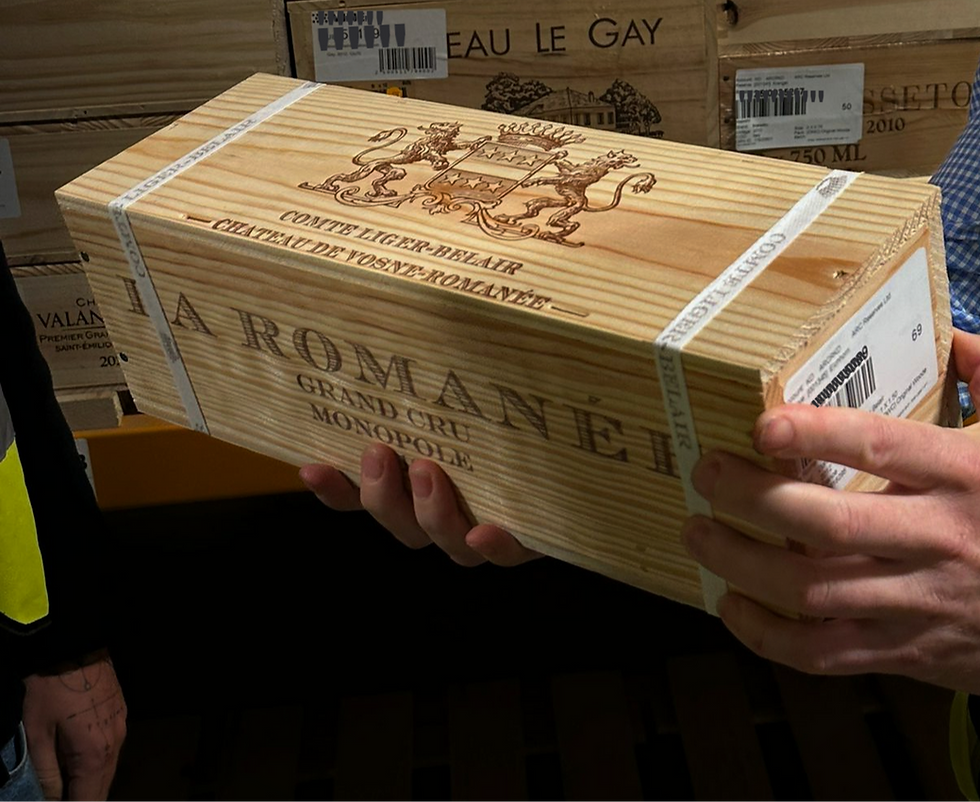
Alex: Diversification reduces risk, even within a niche asset like fine wine. While Bordeaux remains a core market, I’ve deliberately diversified across other leading regions and globally recognised producers. Different regions mature at different speeds, are driven by different buyer bases, and can perform differently across market cycles. This regional diversification, combined with a focus on established blue-chip wines, has been central to how my collection is structured.
Martin: One theme you often mention is low correlation. How important is that within a broader portfolio?
Alex: It’s critical. Fine wine has historically shown very low correlation to equity markets. During periods of stress, wine prices have tended to be far more resilient than global equities. That defensive characteristic makes wine an effective stabiliser within a multi-asset portfolio. It’s not about replacing traditional assets, but about complementing them with something that behaves differently over time.
Martin: Fine wine is also a physical asset. How does that tangibility influence your conviction?
Alex: Tangibility is one of wine’s greatest strengths. You own a real, finite asset that is globally recognised and always in demand. Each bottle that is consumed permanently reduces supply, which supports long-term value. At the same time, the wine improves with age, increasing both quality and desirability. That dynamic of improving quality alongside shrinking supply is quite unique among alternative investments.
Martin: Tax efficiency is another topic that comes up frequently with your network. How do you see this aspect?
Alex: For private investors, the tax treatment can be very attractive. In countries such as Germany, gains may be largely tax-free if the required holding period is met, and storage in bonded warehouses avoids VAT and import duties. When structured correctly, this can make a meaningful difference to net returns and is one of the reasons wine works so well as a long-term holding rather than a short-term trade.

Martin: Your wines are stored in bonded warehouses. Can you explain how storage works and why it matters?
Alex: Storage is absolutely central to fine wine, both from a quality and an investment perspective. My own collection is held via ARC Reserves at LCB Drakelow, while many other Cellar Advisor clients store at LCB Eton Park. Both are leading bonded warehouses with world-class standards.
What matters most to me is that the wine is professionally stored under perfect conditions – correct temperature, humidity, security, and full traceability – and that ownership is clearly documented in my name. From my point of view, the process is very straightforward: Cellar Advisor looks after everything end-to-end, from sourcing and strategy through to arranging bonded storage and ongoing oversight.
Martin: How do you view the relationship between Cellar Advisor and the bonded warehouse?
Alex: I see it as a very clean and sensible setup. Cellar Advisor advises me on what to buy, how to build the collection, and how to think long term. The bonded warehouse – whether that’s LCB Drakelow or Eton Park – provides secure, professional storage.
As a client, it doesn’t feel fragmented at all. Everything is coordinated, but roles are clear. My wines are safely stored, fully insured, and professionally managed, while Cellar Advisor remains focused on performance, access, and strategy. It feels like one joined-up service, just done properly.
Martin: How would you describe Cellar Advisor’s role in your collection overall?
Alex: Advisory and structure. This isn’t a fund or a discretionary product – it’s a personalised advisory relationship. While decisions are always discussed and aligned with my objectives, Cellar Advisor does all of the heavy lifting: market research, sourcing, data analysis, execution, and ongoing support.
You don’t need prior experience in fine wine as an asset class – the team provides the guidance, expertise, and day-to-day assistance, particularly during volatile periods, while I remain invested in the long-term vision.
Martin: Finally, looking ahead, why are you excited about the next phase of the wine market?
Alex: Because the fundamentals remain strong. We’re seeing attractive pricing relative to history, excellent recent vintages, and continued global demand. Fine wine is a long-term asset – five to ten years at least – and the current environment reminds me of earlier periods that proved rewarding for patient investors. For those who understand cycles and focus on quality, this feels like the start of a very interesting new chapter.
We would like to thank Alex for generously taking the time to speak with us. We hope you find his insights valuable. Should you wish to learn more, please click the button below.


Comments